Saturday18JulyEnds
on: 18-Jul
5 hours /
1
Day
open
Booked Places:
4
Available
Places: 2
Saturday22AugustEnds
on: 22-Aug
5 hours /
1
Day
open
Booked Places:
2
Available
Places: 4
The End
⚠️ There are no registration dates available at the moment.
Duration:
()
On-site
Location:
Group Session:
The course attendance fee, if attended with a group, is up to 6 people.
Private Masterclass:
The fee includes attendance for one person with a private session with the teacher 1-1. Note: An additional £200 fee will be added for other people ("guests").
This level is designed to be the correct scientific gateway for anyone wishing to enter the world of perfume manufacturing on professional grounds. In this intensive single-day course, you will learn how to understand the nature and synthesis of raw materials, handle official documentation, and work with essential solvents to ensure the safety and quality of your products before manufacturing begins.
Course Overview
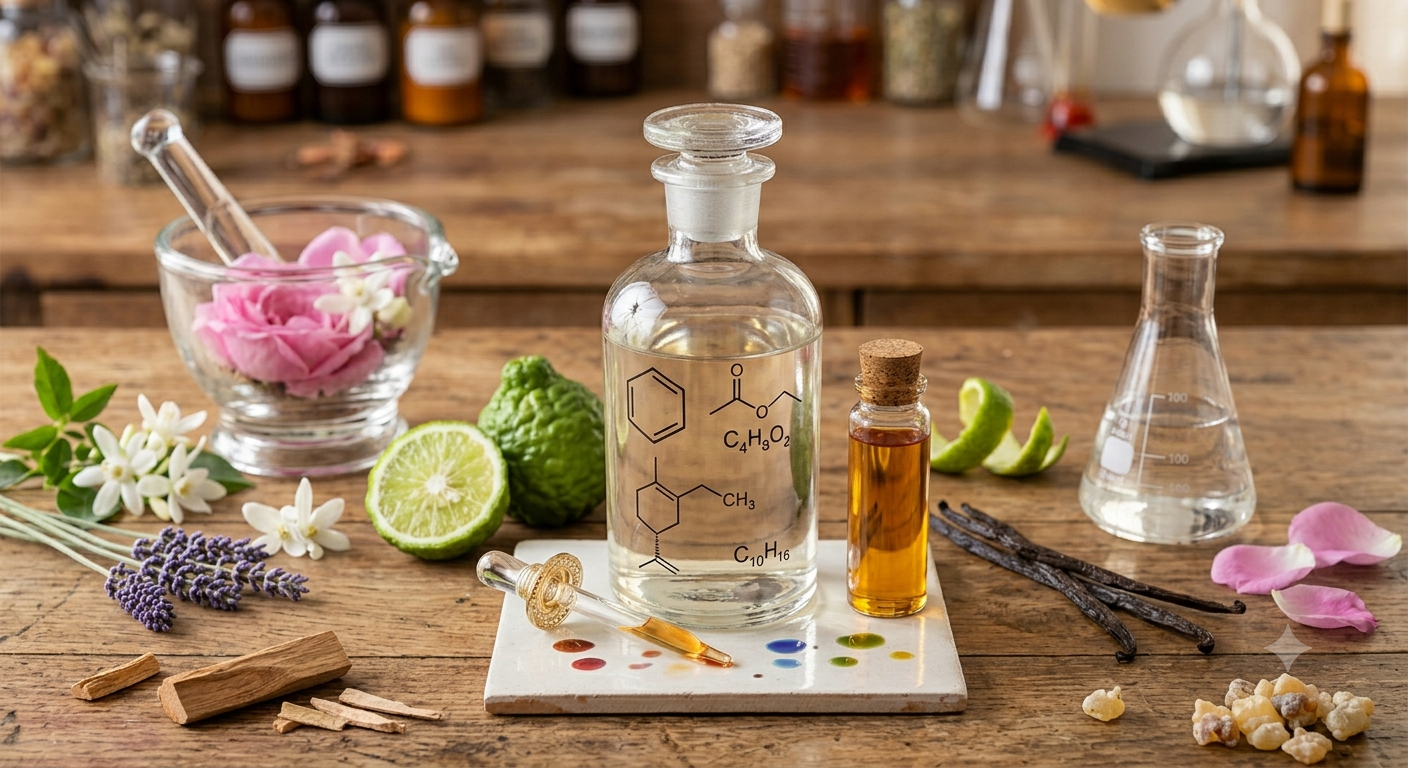
This introductory course is designed for individuals interested in the chemistry behind perfume formulation. Participants will explore the fundamental principles of material chemistry that contribute to creating fragrances, including the structure and behaviour of aromatic compounds, scent classification, and solvents.
What You Will Learn in the Course:
* An overview of material chemistry.
* Basic chemical reactions relevant to perfume formulation.
Reading and Analysing Safety Data Sheets (MSDS / SDS):
* Understanding the sections of the document, hazard identification, safe handling of materials, and correct storage.
*Compliance with the International Fragrance Association (IFRA) Conformity Certificate: An introduction to the organisation, and how to read and understand a fragrance oil conformity certificate.
Solvents, Natural Materials, and Water Bases:
Dipropylene Glycol (DPG) & Propylene Glycol (PG): Their chemical properties and uses as standard solvents.
Hydrosols: Utilising aromatic waters derived from distillation as water bases.
Witch Hazel: Its use as an astringent and natural fixative in water-based formulations.
Aromatic Compounds:
* Structure and properties of aromatic compounds.
* Commonly used natural and synthetic fragrance materials.
* Safety considerations when handling aromatic compounds.
* The role of top, heart (middle), and base notes in a perfume composition.
* Examples of popular fragrances and their classifications.
Basics of Perfume Formulation:
* Introduction to fragrance composition (essential oils, aroma chemicals, and solvents).
* Understanding dilution and concentration (e.g., Eau de Parfum vs Eau de Toilette).
* Simple formulation exercises: Creating a basic fragrance blend.
Practical Applications:
* Hands-on activities: Identifying scents through blind olfactory testing.
* Group projects: Creating a simple fragrance blend using the provided materials.
* A discussion on ethical sourcing of ingredients and sustainability in the perfume industry.
Why Join Our Course?
* Gain an understanding of the fundamental principles of Level 1 material chemistry relevant to fragrances.
* Identify and classify different aromatic compounds used in perfumery.
* Receive accredited certificates that enhance your career opportunities.
Target Audience:
* Beginners interested in learning the basic material chemistry behind the art and science of perfume making.
* Individuals considering a career in fragrance formulation or related fields.
Expected Outcomes:
*Independent Compliance Literacy: The ability to read and understand any Safety Data Sheet (SDS) or IFRA certificate attached to fragrance materials without external assistance.
Formulation Judgement:
Distinguishing between solvents, natural materials, and water-based components, and determining exactly when and how to incorporate them into fragrance bases.
Laboratory Safety: Applying professional safety standards within your personal or commercial laboratory to mitigate the risks of volatile chemicals.
Advanced Readiness: Establishing a solid foundational knowledge base that qualifies you to progress to advanced and commercial manufacturing stages.
Core Chemistry: Comprehending the essential chemical principles underpinning fragrance structure.
Fragrance Components: Identifying the key components of a perfume, including top, heart, and base notes.
Basic Formulation Skills: Acquiring an introductory grasp of simple perfume blending techniques.
Yes, you can apply for a grant through our grant application process. Please visit for more information.
We welcome learners who are 10 years old and above.
No prior experience is required. Our courses start from the basics of perfumery and gradually move to advanced professional techniques. Everything is explained step by step.
Yes, after successfully completing the course and final project, you will receive an official certificate confirming your skills in perfume creation.
Absolutely. Our programs are designed for beginners, hobbyists, and aspiring professional perfumers alike.
Yes. We provide detailed formulas, ingredient lists, and guidance on how to source high-quality fragrance materials.
Yes. Many of our students use the knowledge from our courses to create their own perfume brands or work professionally in the fragrance industry.
 EN
EN

.png)